Tangama FarmsIsinya · Kajiado, home
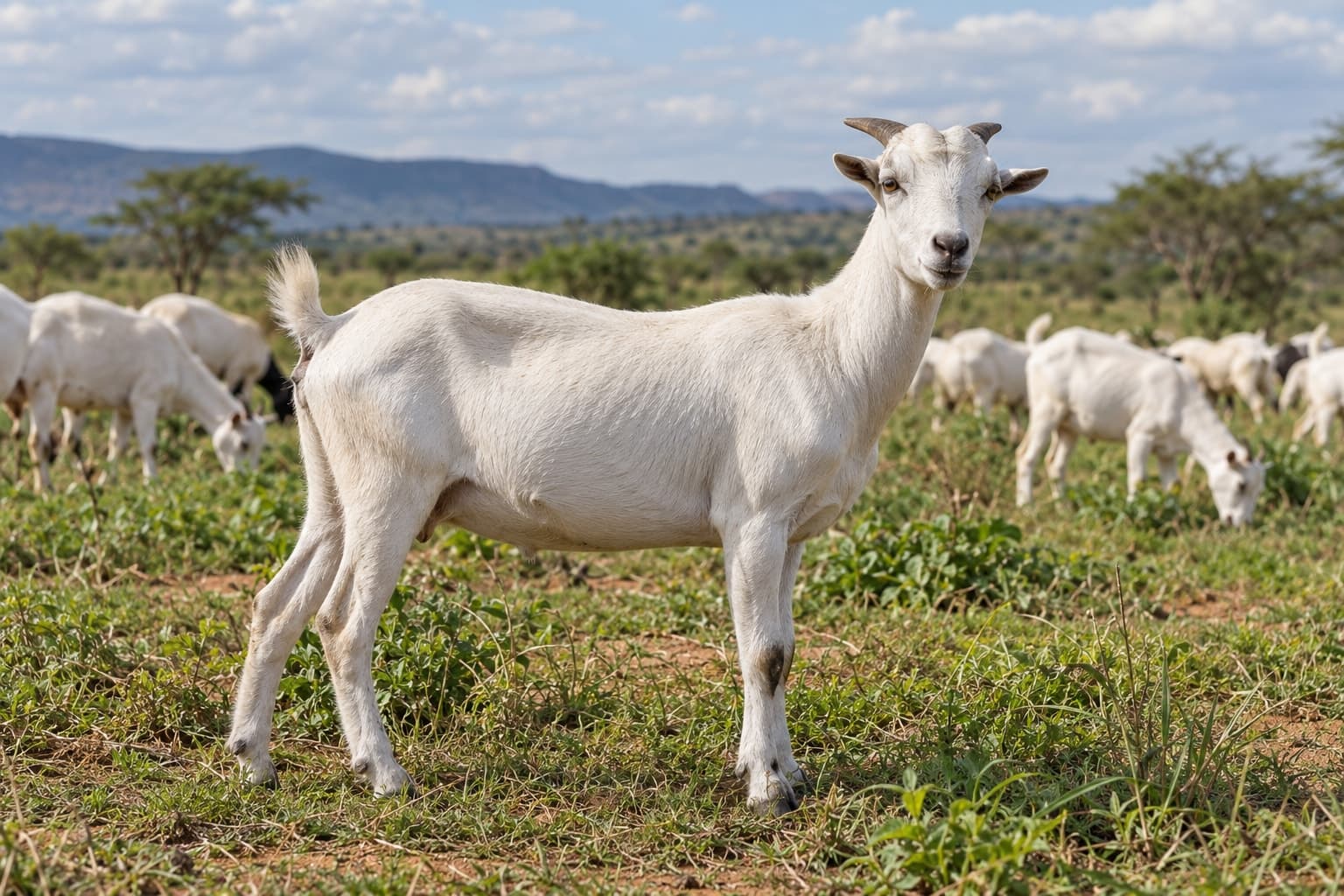
A white Galla buck standing side on in green browse, the rest of the herd grazing behind him, acacia and hills beyond.

Feed & Land

We grow the feed before we grow the herd

Grazing when the rains allow, home grown fodder when they do not, and hay and silage put away for the months in between. The herd grows only as fast as the feed does.

Principle
Feed first
Grasses
Brachiaria · Rhodes · Napier
Reserves
Hay & silage
Guidance
KALRO-aligned

Anyone can feed a herd in April. The number of animals this farm keeps is set by what it can feed in the worst week of August, and that feed has to be grown, cut and stored months before it is needed.

One cycle, round every year

  1. Rain grows forage

    Two rains a year bring the grass on across the grazing land and the farm’s own fodder blocks.

  2. Animals graze

    The herd walks out to graze and browse, taking what the land offers while it offers it.

  3. Surplus is conserved

    What the animals cannot eat in the wet months is cut and made into hay and silage.

  4. Manure comes home

    Every night in the pens leaves manure behind. It is gathered every morning, stacked and turned.

  5. Compost feeds the crop

    Composted manure goes back onto the fodder blocks, and the next rain grows more feed on better soil.

What we grow for feed

A short list of proven forages for Kenya’s drier country, chosen for yield, drought tolerance and what each one is best at: grazing, hay, silage or protein.

  • Brachiaria

    A deep rooted perennial grass that stays green well into the dry season. Leafy, palatable and good in protein for a grass, it can be grazed or cut and comes back after both.

    Used for
    Grazing and cut and carry
    In plain terms
    Sown on well prepared ground with the rains; kept leafy by cutting before it gets stemmy
  • Rhodes grass

    The hay grass of Kenya’s drylands: hardy, quick to establish, spreading by runners and forgiving of poor seasons.

    Used for
    Hay, and grazing between cuts
    In plain terms
    Cut at early flowering, when quality is highest. Leave it longer and you bale stems
  • Napier grass

    Tall, heavy yielding and hungry. On black cotton soil with manure and water it produces more bulk per acre than anything else on the list.

    Used for
    Chopped feed and silage
    In plain terms
    Cut at about a metre high, leaving a short stump to regrow; chopped before feeding so nothing is wasted
  • Forage sorghum

    A fast annual that tolerates heat and short rains, grown for a single heavy cut of silage from each season.

    Used for
    Silage
    In plain terms
    Sown at the start of the rains; harvested when the grain is soft and chopped straight into the pit
  • Legumes and protein crops

    Desmodium, lucerne and lablab in the fodder blocks, with fodder shrubs such as calliandra and leucaena along the edges: the protein that grass alone cannot supply.

    Used for
    Protein, and nitrogen for the soil
    In plain terms
    Mixed with grass or fed alongside it, so the ration is balanced from the farm rather than from a bag
  • Grazing and browse

    The land beyond the farm: natural grass for the cattle and sheep, and acacia and shrub browse for the goats.

    Used for
    The bulk of the diet, in season
    In plain terms
    Walked to every day on permitted and leased land, but never counted on to carry the herd through the dry
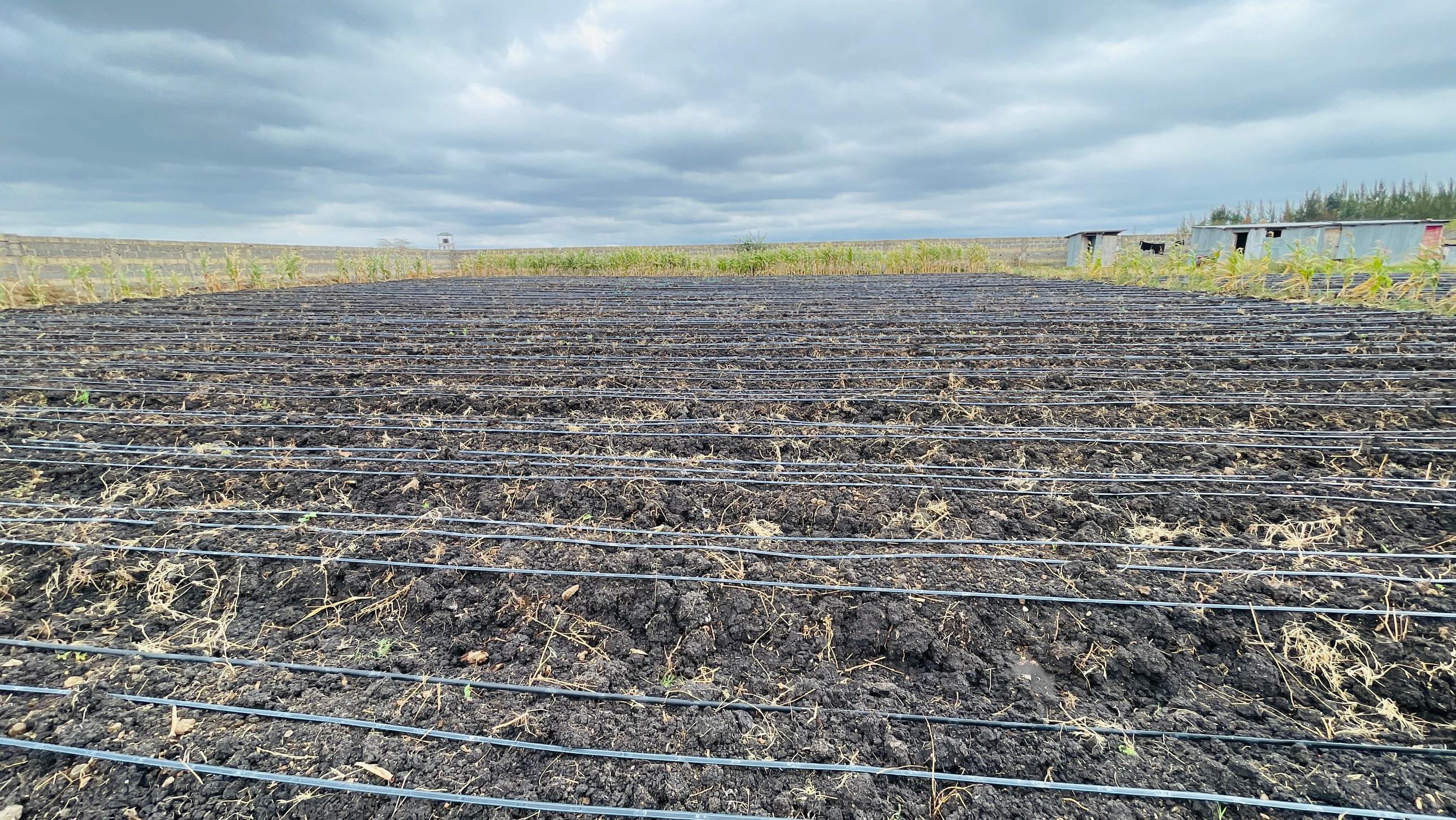
A block of freshly worked black cotton soil laid with rows of drip irrigation line, a maize margin and mabati sheds along the boundary wall under a grey sky.

Fodder ground worked and laid with drip lines

Putting the rains away

The wet season surplus is the dry season ration. Conserving it well is the difference between a farm that sells animals in August because it has to and one that sells them when they are ready.

Hay

Grass cut, dried and baled: light to store, easy to feed, and the backbone of the reserve.

  1. Cut Rhodes and Brachiaria at early flowering
  2. Dry in the field, turning until it snaps rather than bends
  3. Bale and carry in before dew or rain can reach it
  4. Stack off the ground, under mabati, with air around it

Silage

Green feed pickled in its own juice: heavy to handle, but it keeps the herd on moist, green feed through the driest weeks.

  1. Chop Napier and forage sorghum short
  2. Pack it hard, layer by layer, to push out the air
  3. Seal it airtight in a pit or a tube, and weigh the cover down
  4. Leave it about three weeks to cure; opened carefully, it keeps for months

Two rains, and the stores between

Kajiado does not have four seasons. It has two rains and a long dry, and every feed decision is really a decision about when the grass grows, when it is cut, and how long the store has to last.

JanFebMarAprMayJunJulAugSepOctNovDecFeed yearIsinya
  • RainfallTwo seasons. The long rains March to May, the short rains October to December. Everything else is planning.
  • GrazingStrongest in and just after the rains, thin from July to September. Out every day regardless. What changes is how much comes home in the belly.
  • ConservingHay and silage made from the surplus as each rain ends, while the grass is still worth cutting.
  • Feeding from storeThrough the long dry and the short one. Whatever was put away in April is what the herd eats in August.

Rainfall indicative for the Isinya area · not yet measured on site

What the herd comes home to

Grazing does most of the work. What the animals find in the troughs and feeders at night makes up the rest, and it changes with the season.

Minerals & salt

Availability
Always, free choice
Why
Dry country grass runs short of minerals
Form
Licks and loose mineral in covered feeders

Supplementary feed

Wet season
Light. Grazing carries the herd
Dry season
Hay, silage and chopped fodder every night
Priority
Breeding females, young stock, finishers
Mixed
Increasingly on the farm, from its own crops

Dry season reserves

Rule
Stored before the dry, not bought during it
Measured
In weeks of feed for the herd on hand
Test
No new animals until the store can carry them

The feed base widens first

Each new piece of land is there to grow feed before it is there to hold animals. The herd follows the fodder, never the other way round.

  1. 01

    Fodder at the headquarters

    Blocks of Napier, Brachiaria and legumes on the home farm, watered by drip lines through the dry and fed with the farm’s own compost. Small, but enough to know this soil and keep a reserve.

    Growing now
  2. 02

    The ten acre fodder farm

    The next purchase becomes the main feed production area: grass for hay, Napier and sorghum for silage, and legumes for protein.

    Next
  3. 03

    Leased fodder blocks

    Long term leases on 5 to 10 acre blocks, added as the herd grows. Each one is planted, fed with compost from the pens, and cut for the store.

    As the herd needs it
  4. 04

    Mixing on the farm

    More of the evening ration mixed at home from the farm’s own crops, and less of it bought in a bag.

    Under way
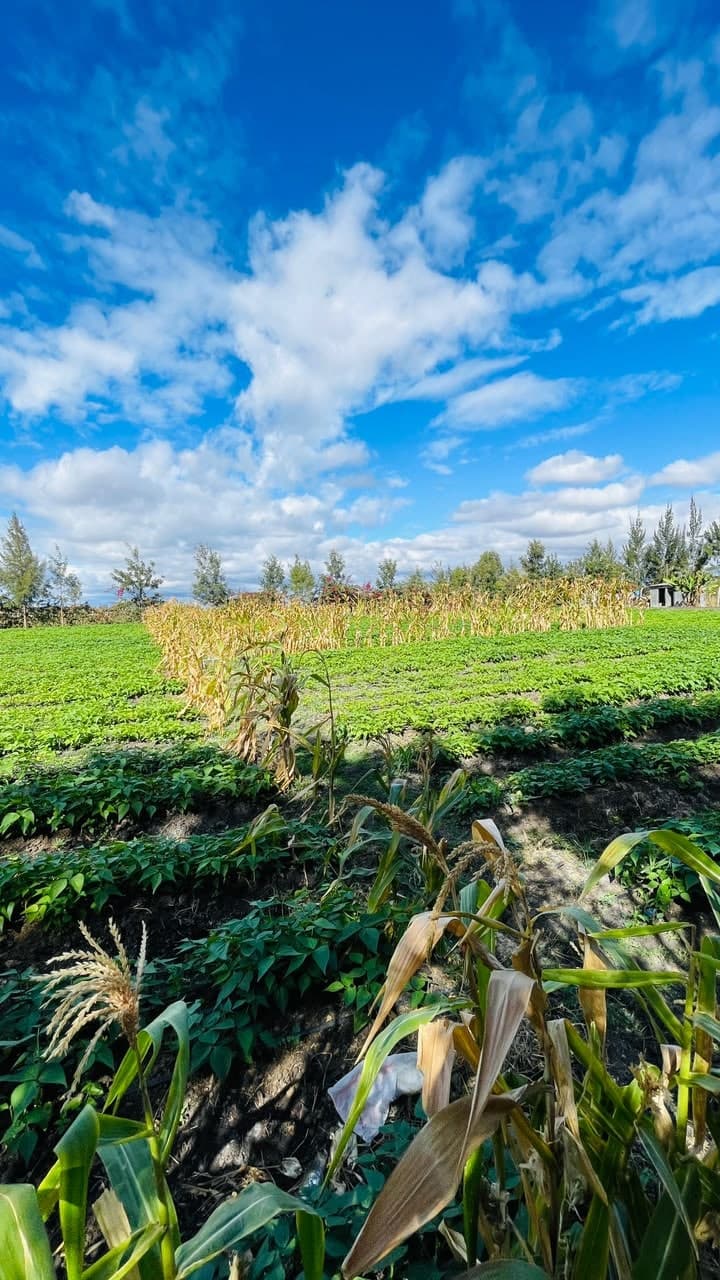
Rows of beans growing under a bright sky, with a stand of maize drying behind and maize stalks in the foreground.

Land near Isinya?

The farm is looking for fodder land to lease long term (5 to 10 acre blocks to begin with) and for permitted grazing nearby. If you have ground around Isinya, we would like to hear from you.