Livestock
Three animals, chosen for this ground
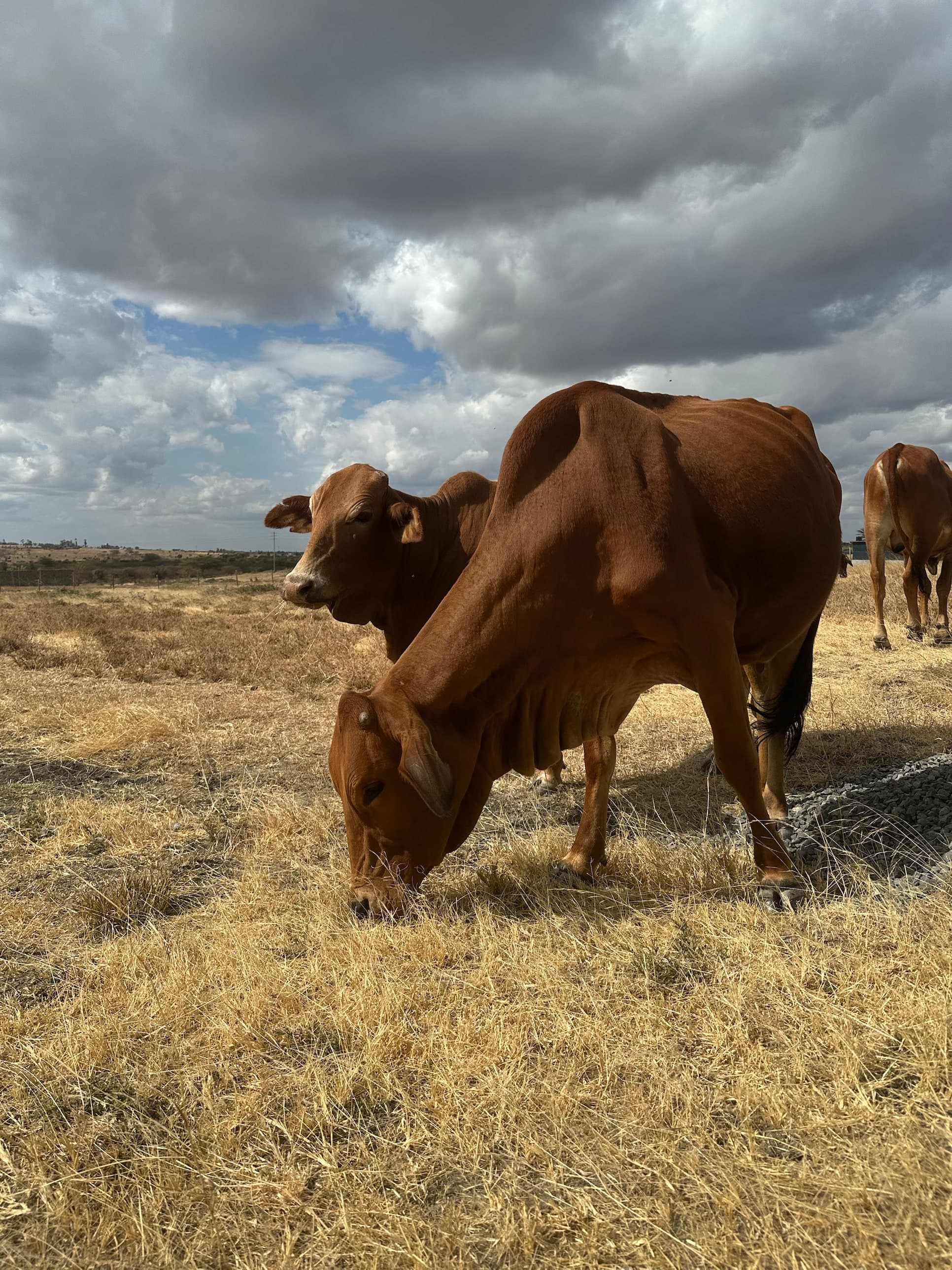
Galla goats, Dorper sheep and hardy zebu cattle, picked because they walk, browse, breed and hold their condition on the dry plains of Kajiado.
- Goats
- Galla
- Sheep
- Dorper
- Cattle
- Boran · Sahiwal · crosses
- Kept for
- Breeding · finishing · milk
Nothing here is chosen for how it looks in a show ring. Every animal has to earn its place on this ground: walking out to graze, coming home in good order, and breeding again.
Availability
What is ready changes through the season: breeding females, young sires, finished goats and lambs, and cattle when they are ready. Ask what is available now.
Galla
Galla goats
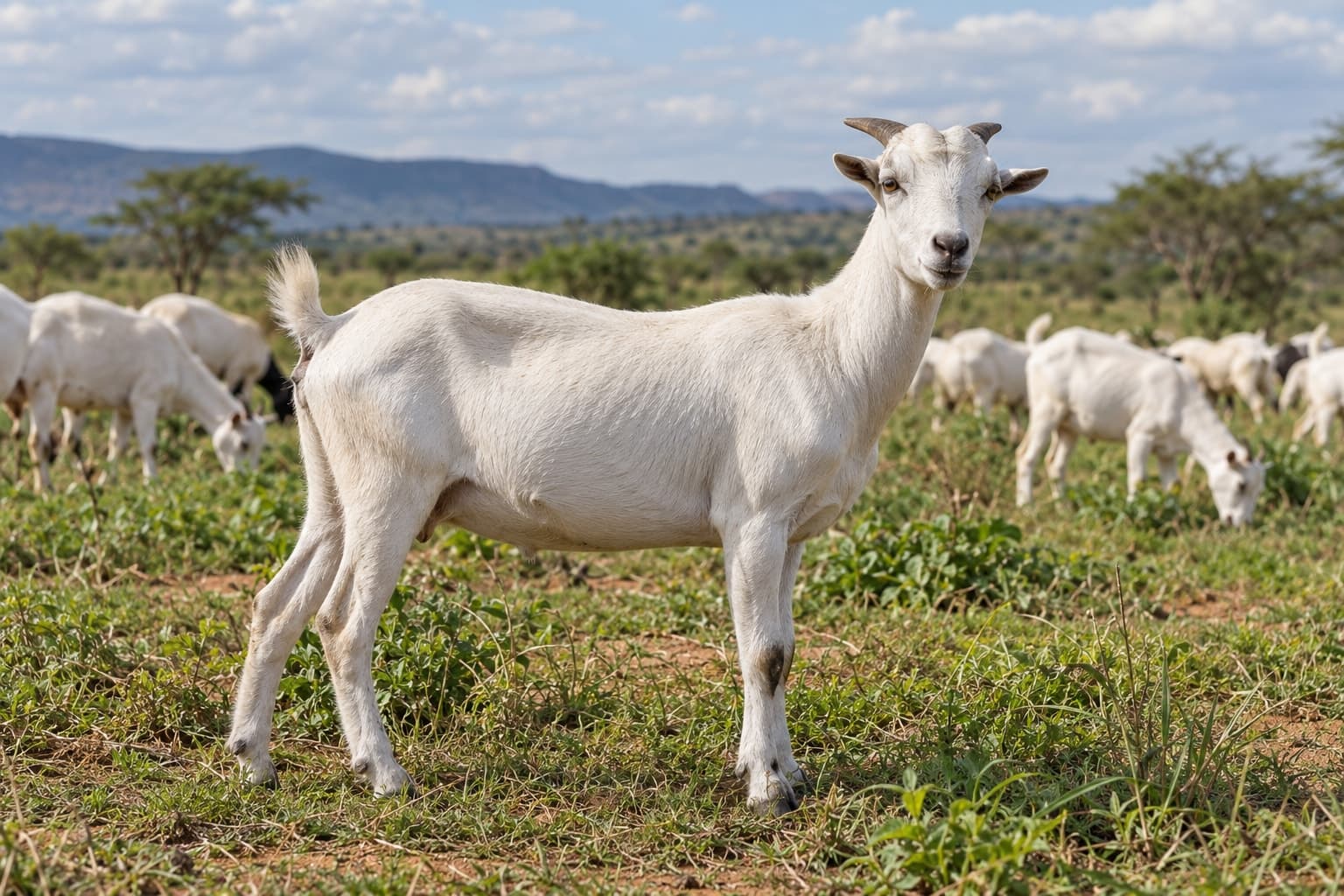
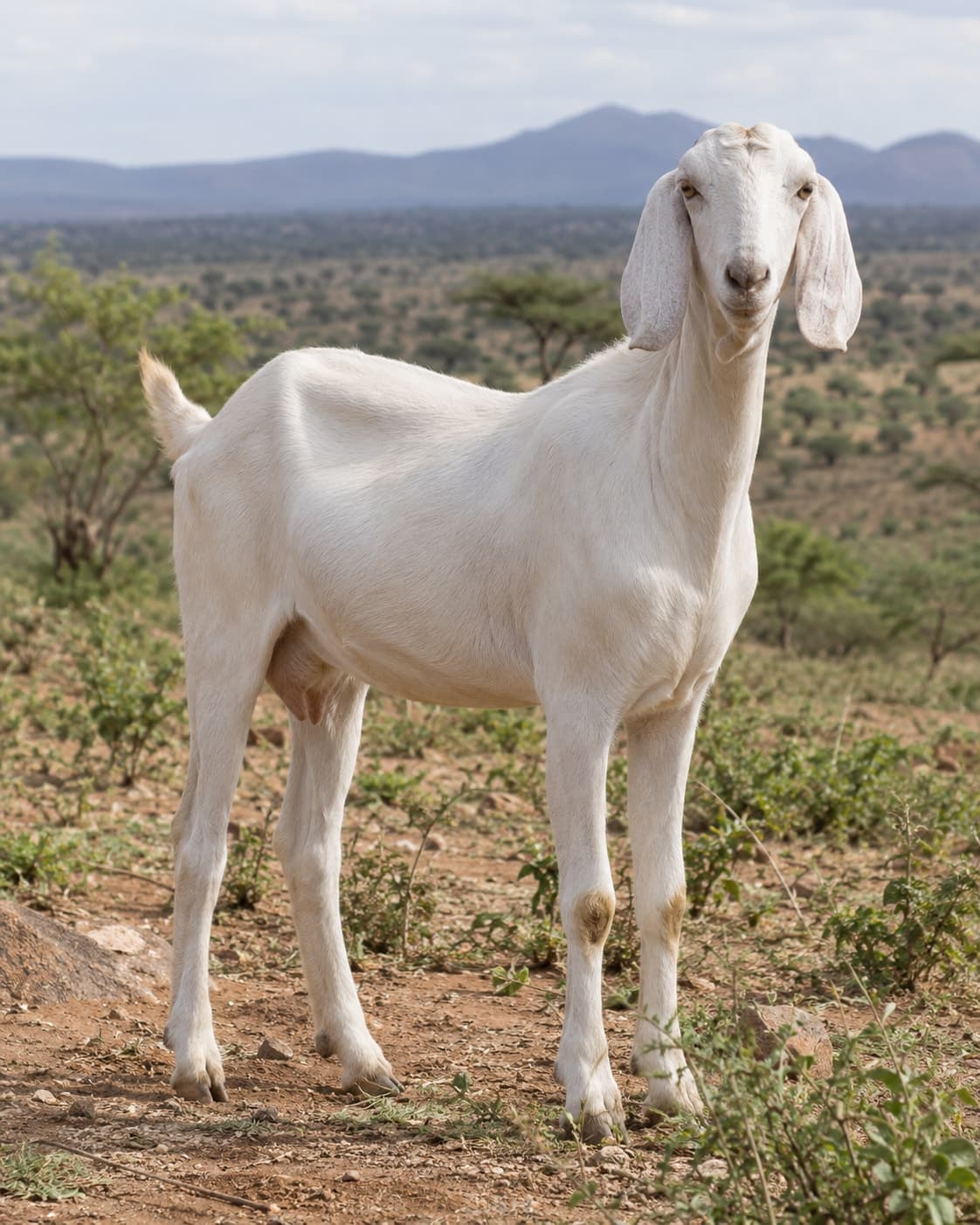
Big, white, long legged goats from the dry north of Kenya, bred for generations to walk far, browse hard and keep going when the grass has gone.
Galla browse as much as they graze: acacia pods and leaves, shrubs, whatever the dry season leaves standing. That makes them the natural first animal for Isinya. They carry good meat on a large frame, give milk worth taking from the best does, and are calm enough to walk out and home every day.
- Kept for
- Breeding, meat, selected milk and long term herd building
- Stays
- The best does as breeding and replacement females, and chosen bucks as sires
- Moves on
- Young bucks and surplus does, finished and sold for meat; culls sold honestly
Dorper
Dorper sheep
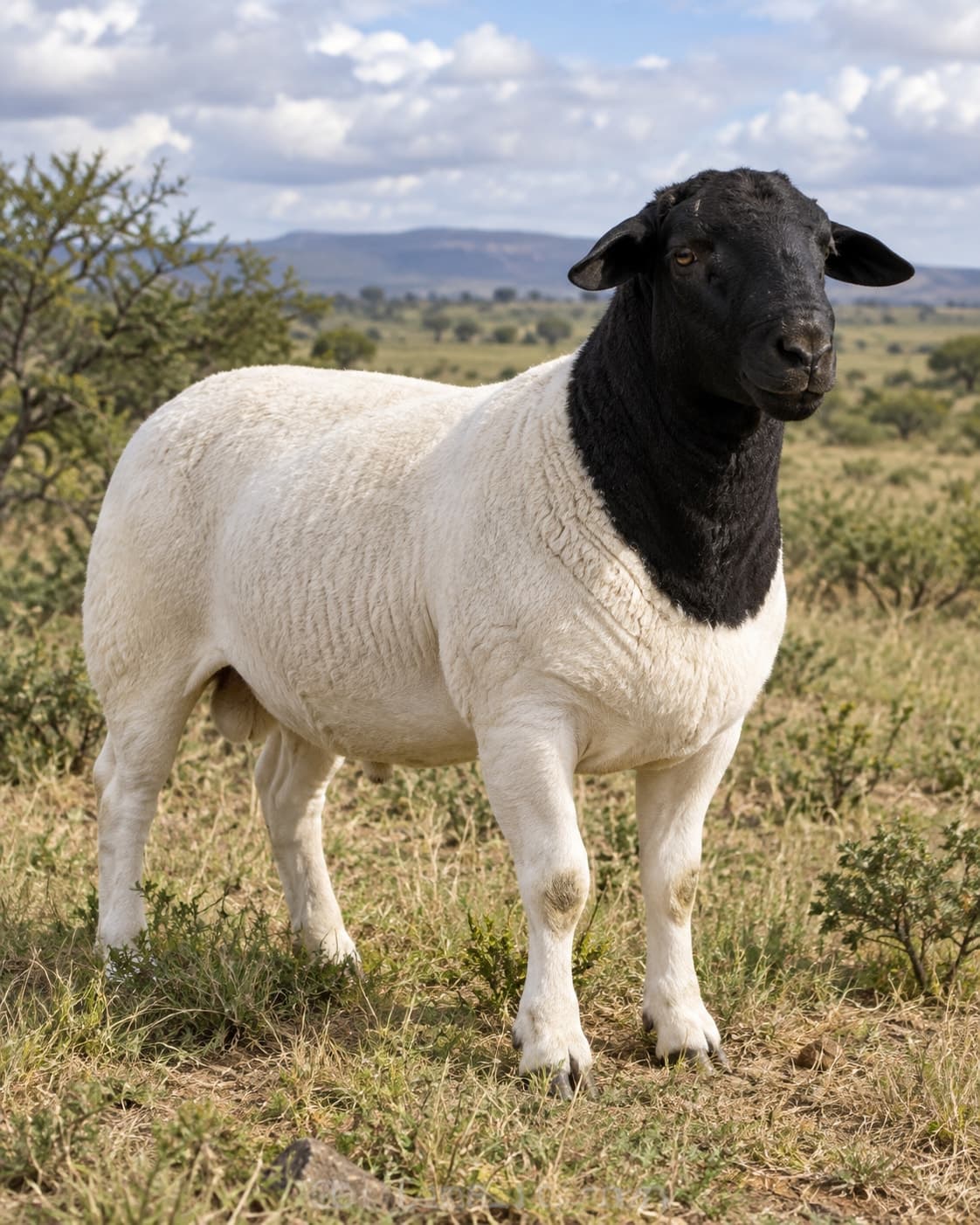
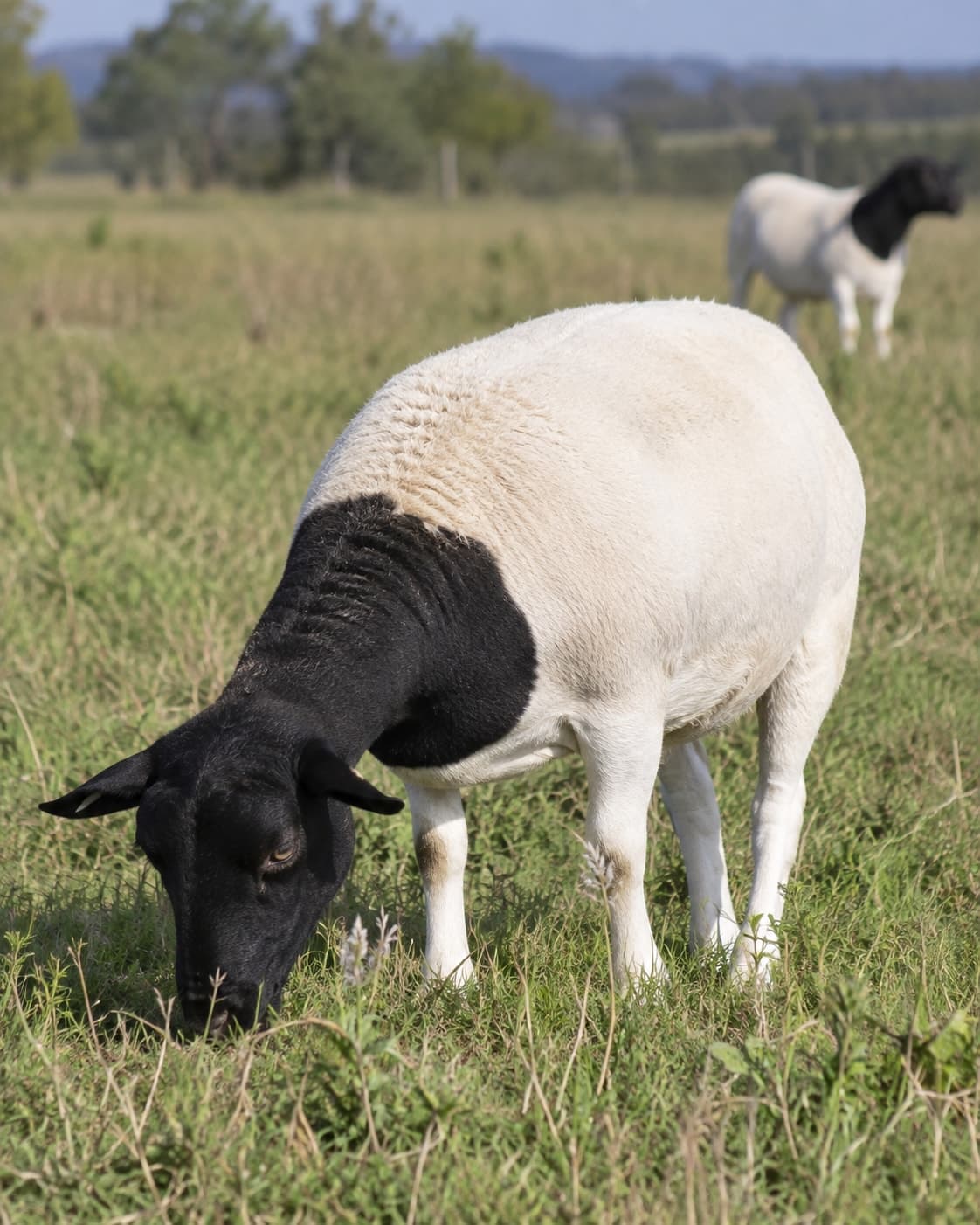
Hair sheep with a black head and a white body, bred in the dry country of South Africa: no shearing, quick growth, and ewes that lamb readily and mother well.
Dorper are grazers more than browsers, so they use the grass the goats leave. They shed rather than grow wool, handle heat well, and put on meat fast, which gives them two roles here: as a breeding flock that grows itself, and as lambs finished on the farm’s own feed.
- Kept for
- Breeding and finishing
- Stays
- Ewes as breeding and replacement females, with selected rams as sires
- Moves on
- Lambs finished on home grown feed; older ewes culled in good condition
Cattle
Hardy cattle
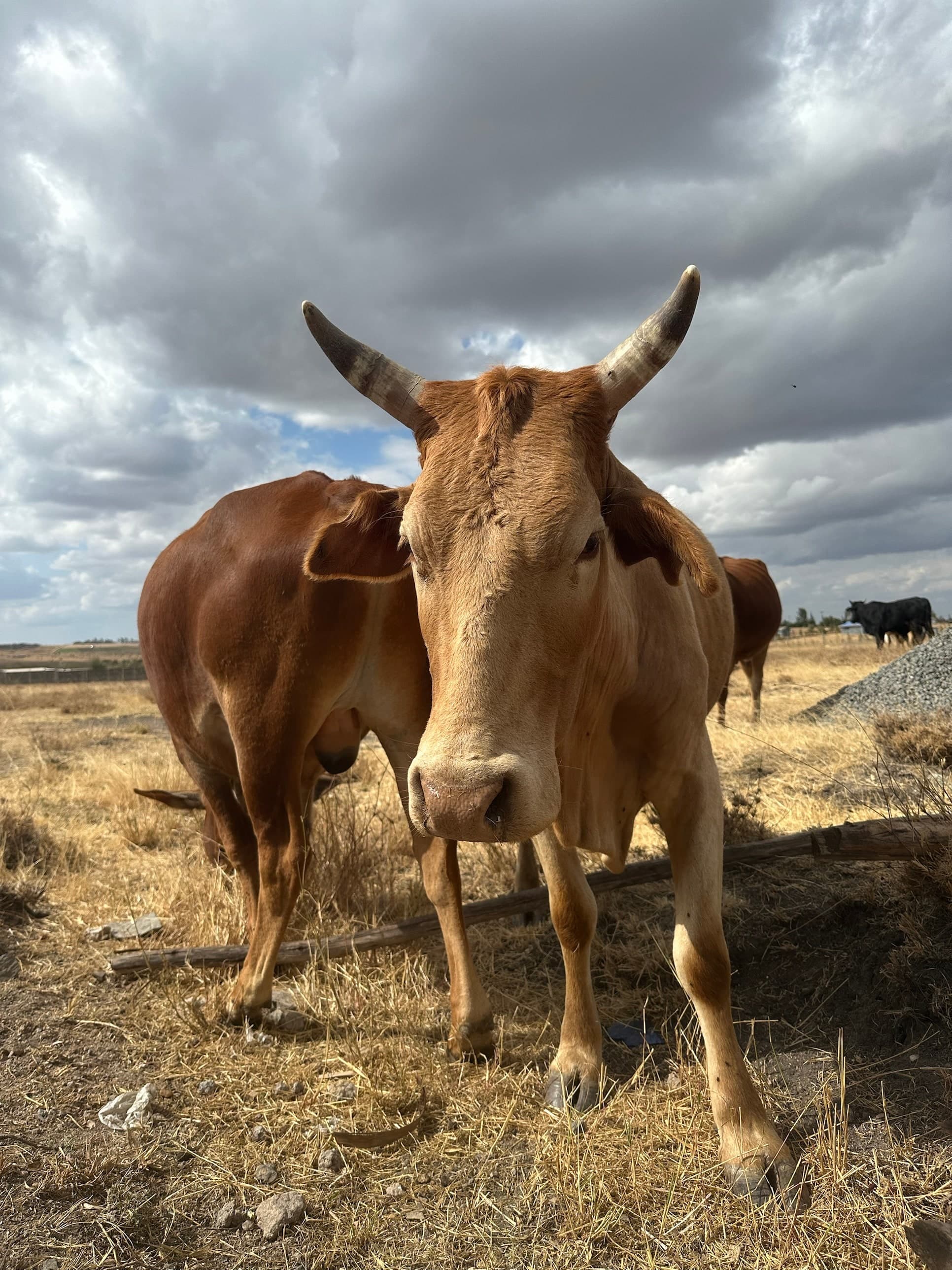
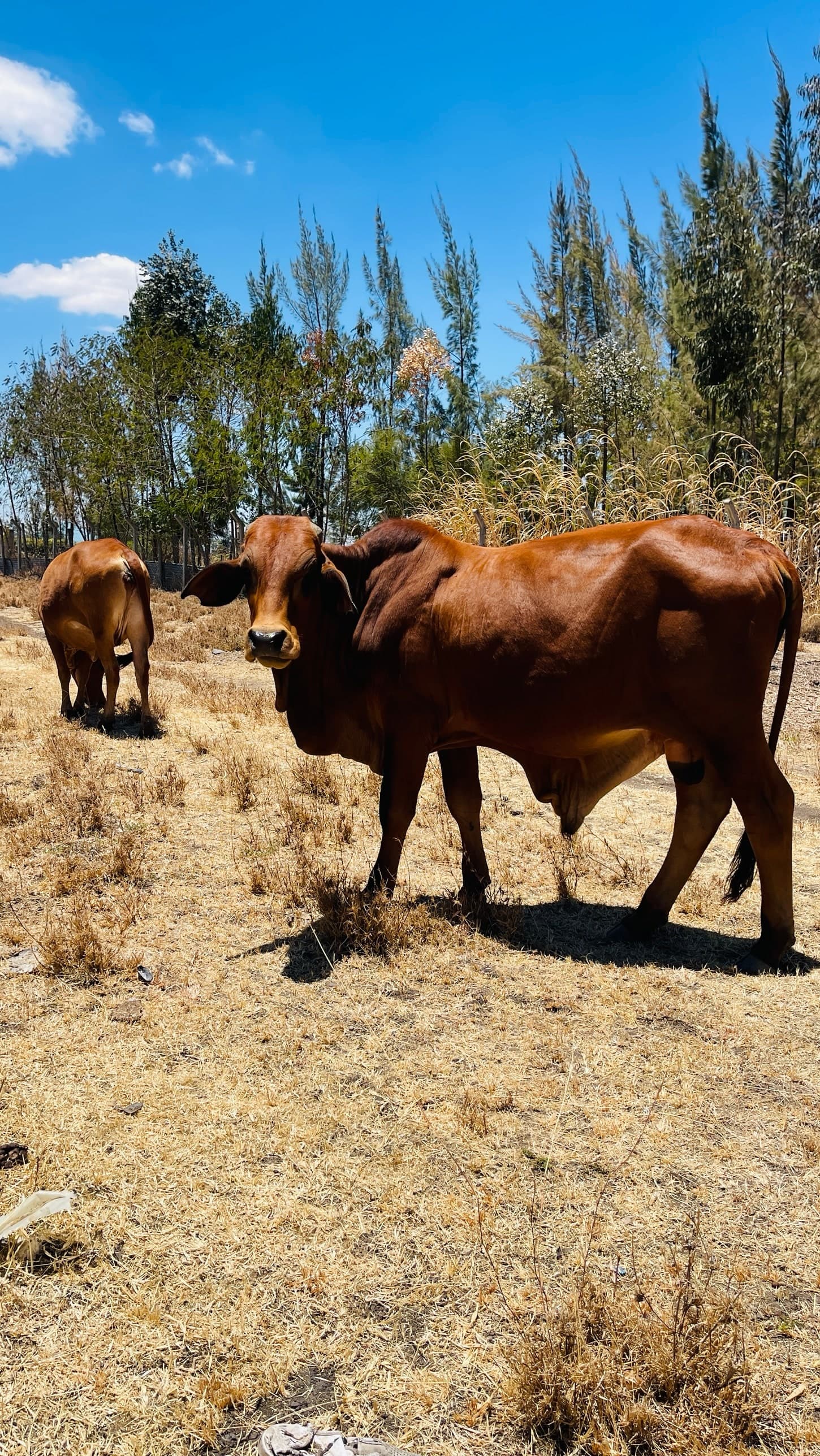
Boran, Sahiwal and crosses between them: East African zebu with the hump, the loose skin and the heat tolerance that dairy breeds from cooler places lack.
The cattle are hardy commercial females: cows that calve every year, raise a good calf on grazing and supplementary feed, and give milk where the breeding allows. Boran bring hardiness, mothering and beef; Sahiwal bring milk. Over time, the best of their daughters become a permanent cattle herd.
- Kept for
- Calves, milk where appropriate, and a permanent herd built slowly
- Stays
- Commercial breeding females and their best heifers as replacements
- Moves on
- Steers and surplus heifers grown on and finished; culls at the right time
Some stay. Most move through.
A livestock farm is really two farms sharing a yard. One is slow: the breeding herd, kept for years and improved a generation at a time. The other is quick: animals grown on, finished and sold.
The breeding herd
Breeding females and the sires that run with them. Every year the best young females are kept back as replacements, so the herd improves from its own daughters rather than from whatever is on sale.
- Breeding females
- Replacement females
- Sires
Moving through
Young males, surplus females and animals bought in lean: grazed, fed, finished and sold at the farm gate. Older and unproductive animals leave as culls while they are still in good condition.
- Kids, lambs and calves grown on
- Bought in, grazed, fed and finished
- Finishers sold at the gate
- Culls
- Breeding stock for other farms
The words we use
- Kids, lambs, calves
- Young goats, sheep and cattle.
- Young stock
- Everything weaned but not yet breeding or finished.
- Breeding females
- Does, ewes and cows kept to have young.
- Replacement females
- Young females kept back to take their mothers’ place.
- Sires
- The bucks, rams and bulls that father the next crop.
- Finishers
- Animals being fed to market weight and condition.
- Culls
- Animals leaving the breeding herd: old, barren or unsound.
- Condition
- How well covered an animal is. The first thing we look at every evening.
Stock from the farm
Stock is sold when it is ready and not before. If you buy breeding or finished animals around Kajiado, tell us what you look for and we will write when we have it.