Galla, Dorper and the humped cow
Why these three, and not the animals that look best in a sale catalogue. Choosing stock for a dry place is mostly a list of what it has to survive.
The easiest way to choose livestock is to pick the animals that look best. They tend to be large, glossy, and bred somewhere with more rain than Isinya will ever see. The harder, better way is to write down everything this place will ask of an animal, and then see what is left standing.
What the place asks
Walk out every morning and home every evening, sometimes a long way. Eat what the dry season leaves, which is often more browse than grass. Hold condition through the long dry on stored feed. Handle heat, ticks and dust. Breed again on time. And do all of that without needing a vet every week.
That list rules out a great deal. What survives it is three animals.
Galla goats
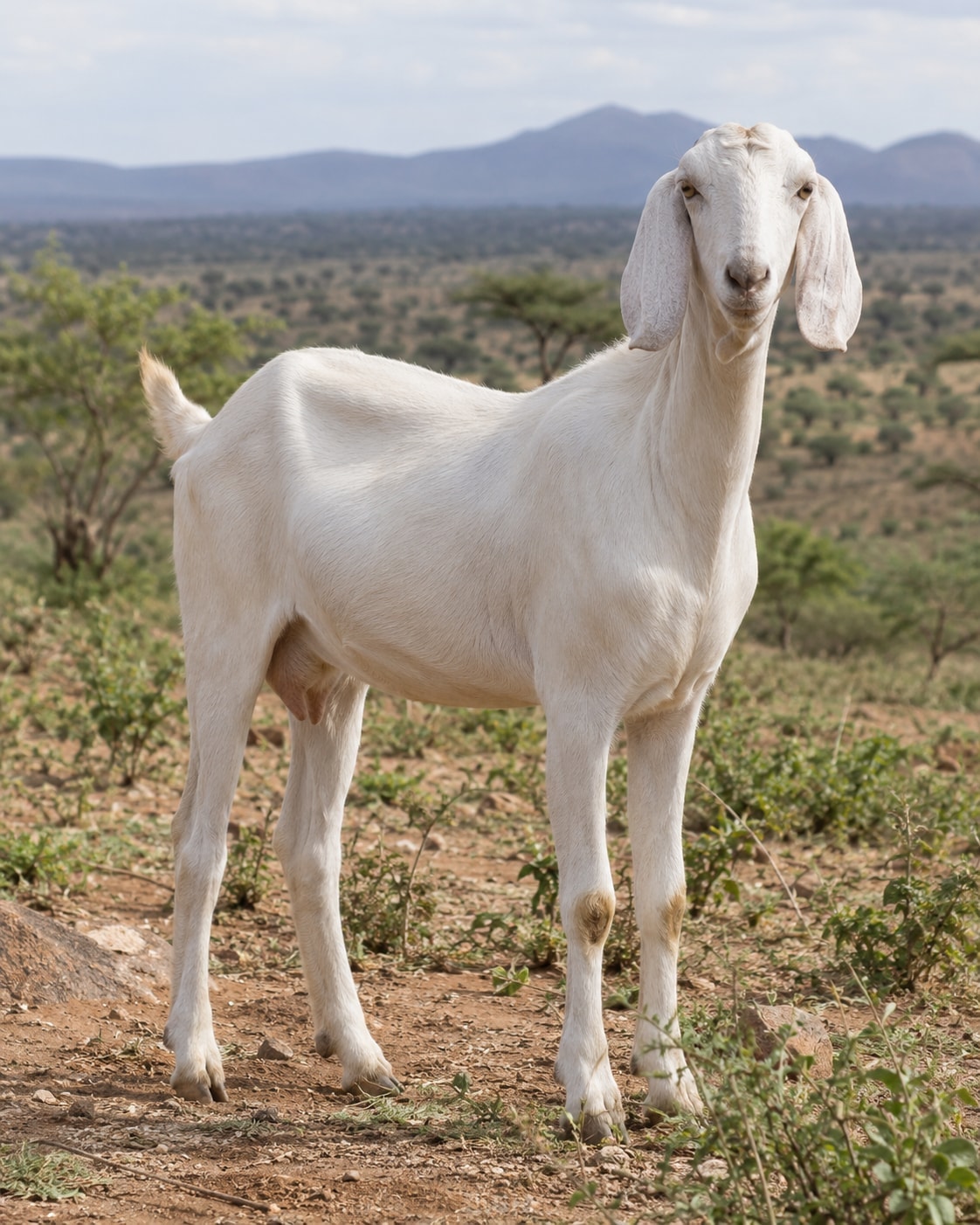
Big, white, long legged goats from the dry north of Kenya, where they have been bred for a very long time to do exactly what this farm will ask. They browse as readily as they graze, so acacia pods and shrubs are food rather than scenery. They carry good meat on a large frame, the best does give milk worth taking, and they are calm enough to walk out and back every day.
Dorper sheep
A hair sheep from the dry country of South Africa: black head, white body, no wool to shear. Dorper grow fast, finish well on grass and supplementary feed, and the ewes lamb readily and mother well. They graze more than they browse, so they use what the goats leave, and they give the farm a second, faster engine: lambs grown on and finished on the farm's own feed.
The humped cow
Boran and Sahiwal are East African zebu: the hump, the loose skin, the dewlap, the heat tolerance. Boran bring hardiness, good mothering and beef; Sahiwal bring milk. Crosses between them give a commercial cow that calves every year, rears a calf on grazing and supplementary feed, and gives milk where the breeding allows.
The cattle side of the farm begins with hardy commercial females rather than a pedigree herd. The best of their daughters are kept, year after year, until the herd has made itself.
Hardy first. Everything else second.
What we would tell ourselves
Buy for the worst month, not the best one. Every animal that comes onto this farm will be judged in August, walking home through the dust, and the ones that were chosen for how they looked in April will be the first to show it.