Eucalyptus, mabati and a cut drum
How the night housing is built: treated gum posts, a tin roof, open sides and plastic drums sawn in half for feeders. Cheap is the wrong word for it.
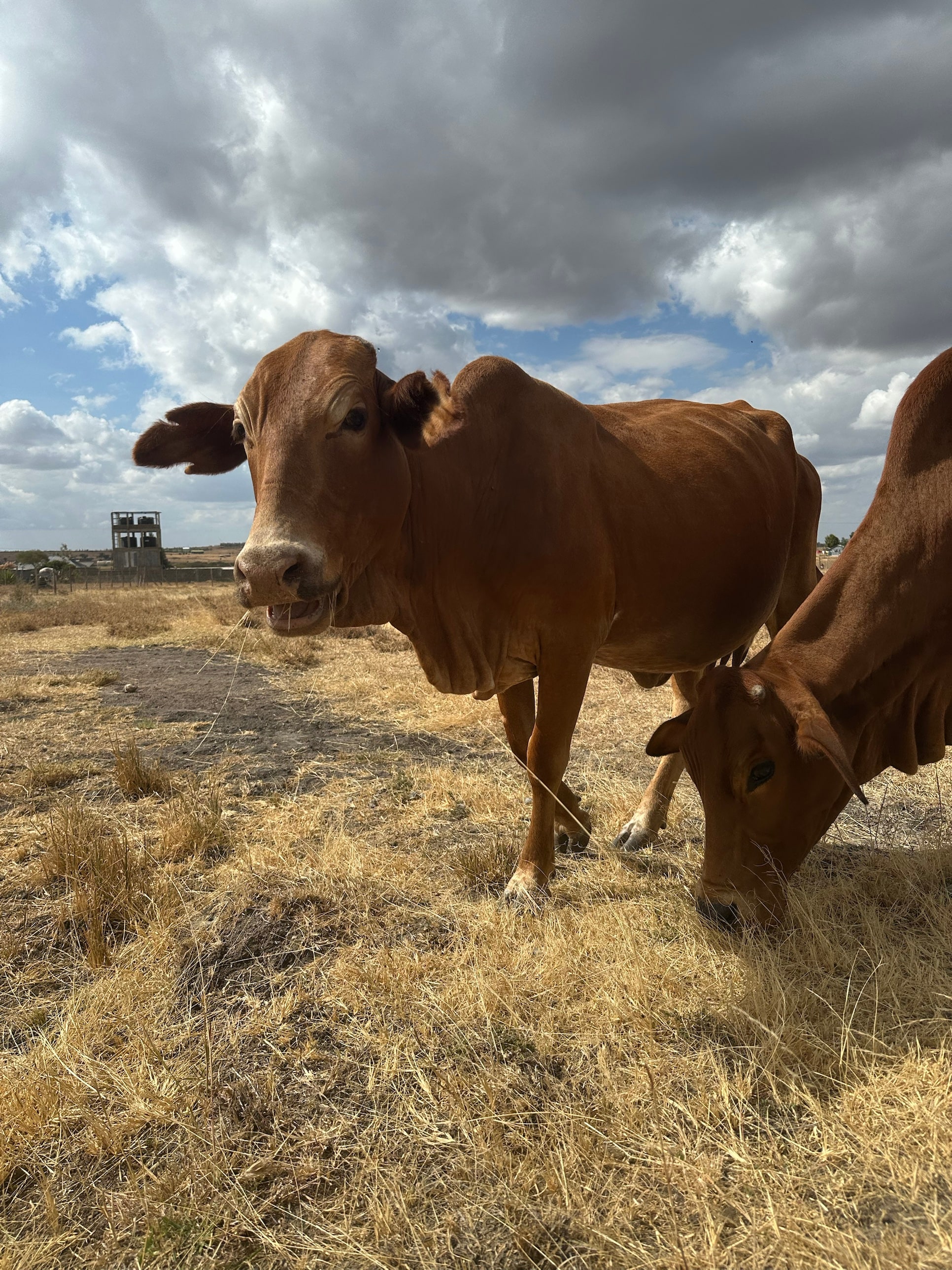
There is a version of a livestock farm that starts with a large, enclosed, concrete barn. It is the version in most of the pictures, and almost all of those pictures were taken somewhere cold and wet. Isinya is neither. What an animal here needs from a building is shade, shelter from wind and driving rain, a dry floor, and safety at night. It does not need walls.
So the night housing is built around what the place actually asks for.
The frame
Treated eucalyptus for the main posts. It is grown locally, it is straight, it takes treatment well, and when a post is damaged it can be replaced in an afternoon by someone with a spade. Eucalyptus and sawn timber for the rafters and purlins. Mabati for the roof, pitched to shed rain one way and guttered into storage, because every roof on a dry farm is also a water catchment.
The sides
Mostly open. Air moving through a shed is what keeps animals cool and keeps damp, ammonia and disease down. Around the small stock pens there is a low mabati barrier, high enough to keep wind and rain off animals lying down and low enough not to trap air, with timber rails above it. Gates are simple timber and mabati, made to be repaired rather than admired.
The feeders
Food grade plastic drums, cut lengthwise and mounted at the height of the animal that eats from them. They cost little, they are easy to scrub, they do not rust, and when one cracks it is replaced the same day. Troughs are plastic or plain, durable concrete. A feeder that is easy to clean is a feeder that gets cleaned.
The ground
This is where the money goes. The site is black cotton soil, which swells when it is wet, shrinks and cracks when it is dry, and moves anything built carelessly on top of it. So:
- permanent structures sit on raised pads, with footings taken down below the layer that moves
- resting areas are compacted hardcore and murram, which drains and stays firm
- shallow drainage leads water away from every pad, not towards it
- concrete goes only where wear, water or hygiene justify it: at troughs, feed faces and wash points, and nowhere else
Resourceful is not the same as cheap. Cheap is a shed that has to be rebuilt in three years. Resourceful is spending where the ground demands it and nowhere else.
What we would tell ourselves
Build for this place, not for the pictures. The best shed for Isinya looks nothing like the best shed for somewhere else, and it will be tested every rain and every dry by the ground under it.