Why the feed goes in before the animals
The quickest way to grow a livestock farm is to buy more livestock. We grow grass, store water and fill a roof with hay first, and this is the arithmetic behind that order.
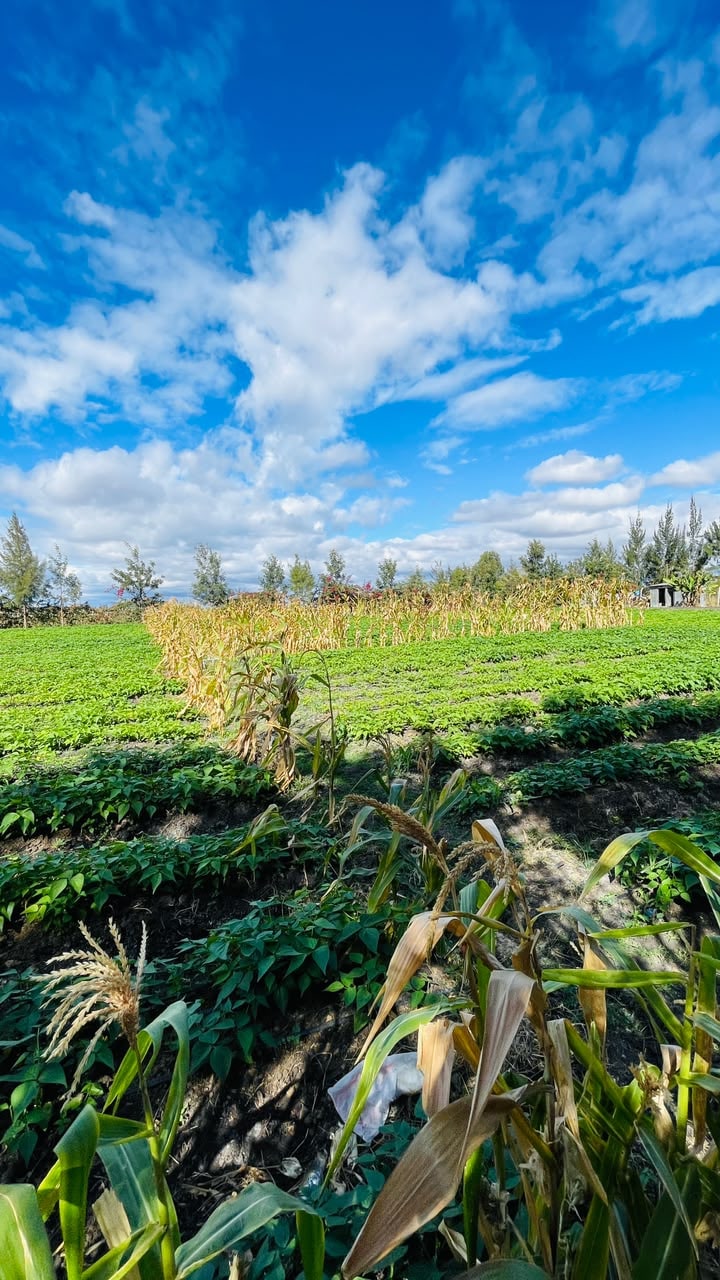
Every livestock farm around here that has gone wrong seems to have gone wrong the same way. The animals came first. They were bought in a good season, on good grass, at a good price, and then the dry came, and the grass went, and the choice was between buying feed at the worst price of the year or selling animals at the worst price of the year. Usually it was both.
So Tangama Farms does the dull part first.
The herd is sized by August, not April
In April, after the long rains, Isinya looks as though it could carry anything. In August it looks as though it could carry nothing. The honest number of animals a farm can keep is the number it can feed through the worst weeks of the dry. In a place with two rains and a long gap between them, those weeks come every single year.
That feed does not appear in August. It has to be grown in the rains, cut at the right moment, dried or ensiled, and kept somewhere dry and safe for months. Which means the store has to exist before the herd does.
What that means in practice
Before any new animals come home, the farm needs:
- water it can rely on through the dry, stored and piped to troughs
- fodder in the ground (Napier, Brachiaria, Rhodes and legumes) so that the rains grow feed rather than just grass on somebody else's land
- a dry roof for hay and firm ground for silage
- pens, a handling race and a quarantine pen, so new animals arrive into a working system rather than a building site
None of that is photogenic. All of it is the farm.
The number of animals on this farm is decided by the size of the store, not by the size of the ambition.
The grazing is a bonus, not a plan
The animals walk out every day to graze and browse on permitted land, and in a good season that is most of what they eat. But grazing we do not own cannot be the thing the herd depends on. It is weather, and other people's decisions, and it disappears exactly when it is most needed.
The home grown feed is the floor. The grazing is what sits on top of it.
What we would tell ourselves
Buy animals last. The temptation to add them is always strong, because they are the part that feels like progress. But a pen full of goats with no hay in the store is not a farm. It is a countdown.