What black cotton soil will tell you
Before a post goes in or a fodder block is sown, we dig a test pit. Heavy clay is good for grass and bad for buildings, and the pit shows both.
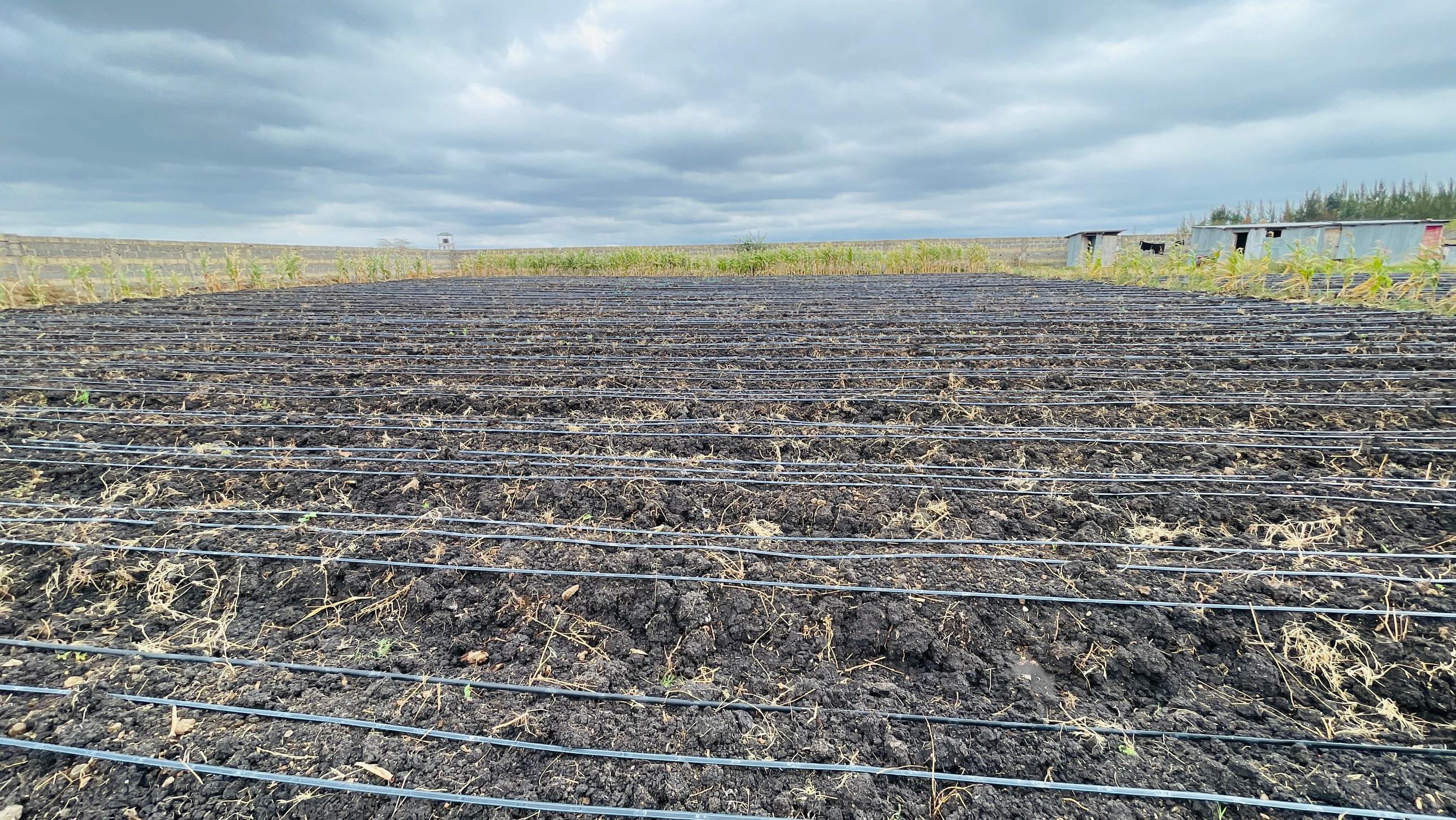
Before a post goes in or a fodder block is sown, we dig a pit and write down what is in it. The ground here is black cotton soil, and it asks two opposite questions at once: how well will it grow feed, and how badly will it treat a building?
A spade answers most of both.
What black cotton soil is
A dark, heavy clay that swells when it is wet and shrinks when it is dry. In the rains it turns to a sticky mass that pulls boots off. In the dry it cracks into plates with gaps you can put a hand into. It holds water and nutrients well, which is why grass grows strongly on it. It also moves, which is why walls built straight onto it crack.
Dig where it will matter
The pits go where things are going to be built and where feed is going to be grown, and at least one goes in the lowest corner, where the water will collect. A pit where nothing is planned tells you about the ground in general. A pit where the cattle yard will be tells you what the cattle yard has to cope with.
What we write down
- how deep the black clay goes before it changes, because footings have to get below the part that moves
- how wet it is at each depth, and whether water stands in the bottom of the pit after rain
- how the roots of whatever is growing now behave, whether they go down or turn sideways at a hard layer
- the colour and smell, because grey blue and sour means waterlogging, and waterlogging decides where not to put things
What it changes
For buildings: raised pads, footings below the active layer, and shallow drainage leading water away from every pad. Resting areas get compacted hardcore and murram, which stays firm when the clay underneath does not.
For feed: Napier and Brachiaria will do well on this ground if the water can drain away from their roots and the soil gets organic matter back. That is what the compost from the pens is for.
The same clay that grows the grass will crack the foundations. The job is to use one property and design around the other.
What we would tell ourselves
Dig before you build. It costs an afternoon and a spade, and it decides where every pen, trough and fodder block goes for the next twenty years.